Thursday, December 30, 2010

MUST TO VISIT #9: The Hachiko Statue

The Hachiko Statue


The Hachiko Statue is one of the most famous landmarks of the city of Tokyo. Located right in front of the Shibuya Station, it serves as a popular meeting place in the city.


Hachiko is a bonze statue of an Akita-ken breed dog, located in front of the Shibuyu Station. The statue faces the station and shows the dog in a sitting posture. The place where the statue is located is also referred to as the Hachiko exit.
Hachiko is more than a statue or a tale, he was a real dog who's story is known throughout Japan and the world today.
 Hachiko was born in 1923 in the city of Odate Japan in the Akita prefecture. He came to Tokyo with his owner, a professor of agriculture at the University of Tokyo named Eisaburo Ueno. Each morning his master would set out for the local train station called the Shibuya Station. Hachiko made a habit of waiting for his master's return each day at the station where the two would meet and journey home together.
In 1925 professor Ueno died from a stroke while at the university and never returned home. After his death his wife sold their home as she prepared to move. She gave the dog to some friends nearby who agreed to care for Hachiko but it would not last. Hachiko soon departed his new home and returned to the station and the old home where he continued to follow the routine and await his master's return for 10 years. Hachiko died in 1935.


Soon after his dead, Hachiko was immemorialized in statue form as the symbol of  legendary faithfulness.


Hachiko in front of Shibuya Station

Monday, December 27, 2010

MUST TO EXPERIENCE #3: Crane Game (UFO catchers)


Crane games, known in Japan as “UFO catchers”, are a mainstay of the country’s arcades.
Players use bottons (or a joystick)  to manipulate a mechanical claw over an enclosed bin full of prizes, in hopes of picking one up and getting it out of the machine.

Crane games are usually full of stuffed toys, but they may have other unique prizes such as mega-size packed sweets and a Japanese cooking pot etc...

You often pay 100 yen per play, or 500 yen per 6 plays.

Sometimes a kind shop assistant comes over to give you an advice, or re-adjust the position of prize as it could be caught easily.

But they are often hard to catch, as the claw is almost purposely made dodgy so even if the claw touches the prize it often misses.

However, you can often just push down the prize with the claw as in the video above, which may be one of techniques you may want to use.

I often see people who are totally addicted and almost forget about how far they've been spending their money on. 

But Japanese can become so enthusiastic about it since the prizes may be "premiere"like some limited character goods from Japanese "anime" or comics which you can only get by playing crane games.

Japanese arcades are often located near stations in a walk distance.
"TAITO STATION" is one of the biggest ones.


Japanese arcades also have variety of cutting-edge games and some photo sticker booths (known as "prikura").

purikura (photo sticker booth)

Even if you are not a big game fan, I guarantee tons of fun!

Thursday, December 23, 2010

MUST TO EAT #9: TAKOYAKI


 Takoyaki(octopus balls) is a famous Osaka specialty.

 “octopus balls", are dumplings made of batter, picked ginger, tenkasu, and green onion,  with octopus meat in the middle and sauce, aonori, mayonnaise, and bonito flakes sprinkled over the top.


Even though they originated in Osaka, we have takoyaki stores almost anywhere in Japan. (though the best one can be found in Okasa!) 

This the fluffy balls are also typical festival snacks that is made and sold at stalls on street.

If you are unfamiliar with eating octopus, just try it! They taste sort of plain, and chewy which you may find strange but they are still the most important element of Takoyaki.

People from Osaka often own their own takoyaki cooker and make takoyaki at home. (It looks easy, but really requires techniques!)

If you try to find takoyaki stores in Tokyo, I suggest to go to Gindako. (Wow they have an English site!)

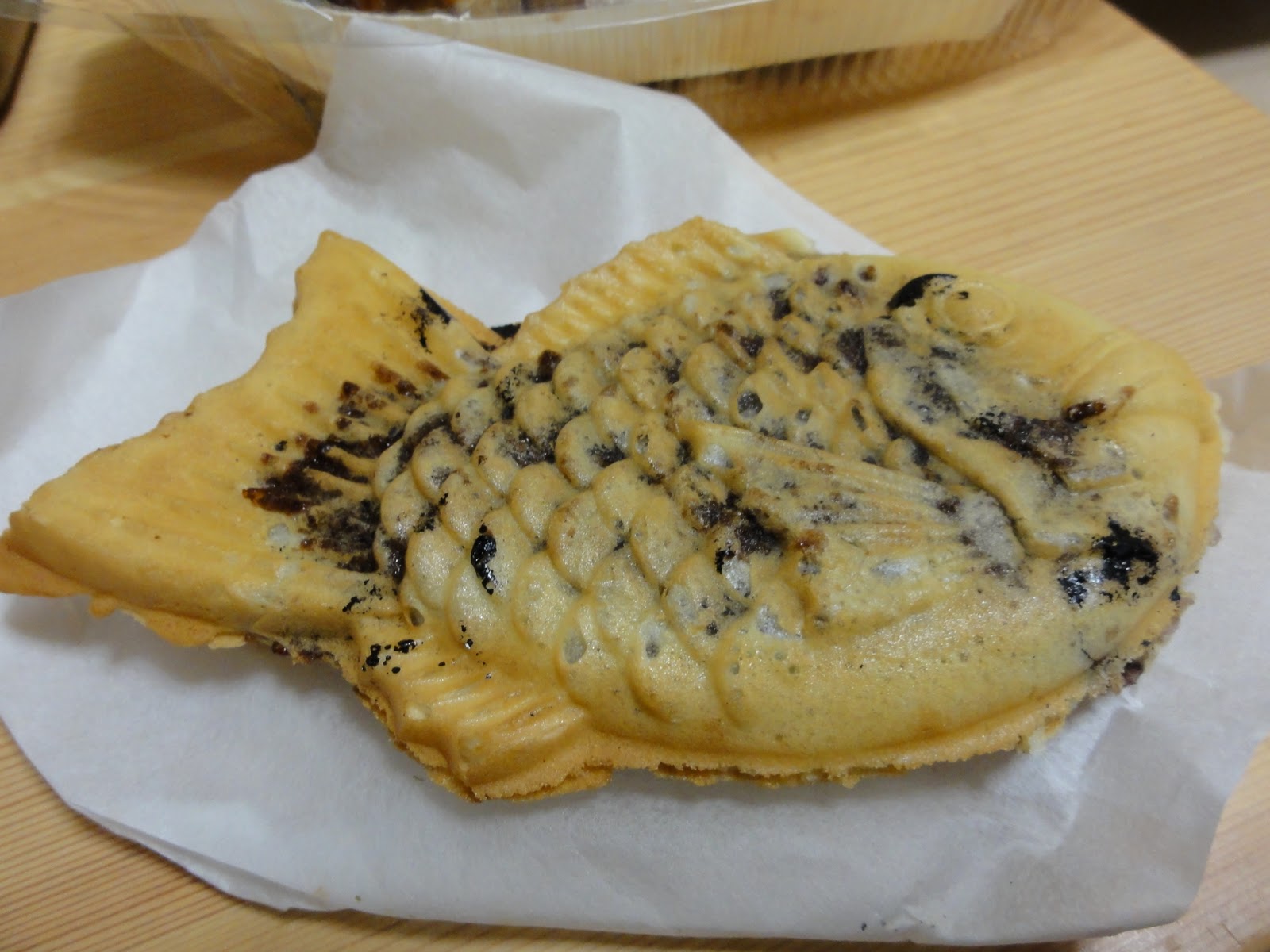
They are one of the best takoyaki which I've ever eaten. Each Takoyaki Plate (8 balls) costs 500 yen and they also have other menu including Yakisoba (fried noodles) and Taiyaki (Japanese fish-shaped cake filled with red bean paste inside). Taiyaki is also one of Japanese favourite snacks. (Don't worry, thry don't taste anything fishy!)

Taiyaki

If you have eaten your lunch but still feel a little hungry, just take a further step to a takoyaki store to experience the Osaka specialty! 

Wednesday, December 22, 2010

MUST TO EXPERIENCE #2: Legendary "Ninja" culture of Edo Period


a "Ninja" show at Edo Wonderland

"Ninja" (忍者:ninja) are largely a myth; a product of Edo period drama, adapted to Japanese and then Western cinema.

A person who uses Ninjutsu is called a Ninja. Ninjutsu is not a martial art. It is an original art of warfare that developed mainly in Iga, Mie Prefecture, and Koka, Shiga Prefecture.


"Ninja" activities include all manner of covert activities. Spying, assassination, planting rumors, sabotage...all these can be considered "shinobi" activities.

Hanzo Hattori may the most famous, and the most powerful of all the Iga Ninja. ( although his actual profession was Samurai)

Hanzo Hattori appears in countless ninja movies and novels dressed in black, flying through the sky, swimming underwater, tunneling beneath the ground, and vanishing into the darkness.

If you want to find out the reality of Ninja history or experience Ninja activities, visit one of these places below. At Iga-Ryu Ninjya Museum, there is a Ninjya house where you can experience a number of tricks.

Iga-Ryu Ninjya Museum homepage
Shiga-Koga Ninjyutsu Yashiki  homepage (Japanese) 
Nikko Edo Wonderland homepage


Tuesday, December 21, 2010

MUST TO EXPERIENCE: ASHIYU


An "ashiyu" (足湯, ashiyu) is a Japanese public bath where people can bathe their feet.

They are mostly located on the street corner in hot springs(onsen) resort area.

In Kinugawa Onsen (a video above), Tochigi, it is located right in front of the station.

The majority of ashiyu are free.


Monday, December 20, 2010

MUST TO EAT #7: BENTO (especially "ekiben")

In Japanese, lunch box is called "Bento".


A well-known part of Japanese food culture, bento boxes are small, compact containers meant to hold an individual serving of rice and a few side dishes. Japanese word "bento" is used to mean a meal served in a box.

A traditional bento consists of rice, fish or meat, and one or more pickled or cooked vegetables, usually in a box-shaped container.

Although bento are readily available in many places throughout Japan, including convenience stores, bento shops, train stations, and department stores, it is still common for Japanese homemakers to spend time and energy for their spouse, child, or themselves producing a carefully prepared lunch box.

And bento may showcase regional specialties - this is true of ekiben, takeaway bento sold at railway stations around Japan.


ekiben at Kinugawa Station, Tochigi. They have a speciality of Tochigi beef.


It is said each prefecture in Japan has their own ekiben.

You can take an ekiben eating tour of the nation if you like!

Friday, December 17, 2010

MUST TO VISIT #8: Tsukiji Outer Market


The Tokyo Metropolitan Central Wholesale Market (東京都中央卸売市場, Tōkyō-to Chūō Oroshiuri Shijō), commonly known as the Tsukiji Market (築地市場, Tsukiji shijō), is the biggest wholesale fish and seafood market in the world and also one of the largest wholesale food markets of any kind. The market is located in Tsukiji in central Tokyo, and is a major attraction for foreign visitors.

Tsukiji Market consists of an inner market where most of the wholesale business and the famous tuna auctions are taking place, and an outer market whose retail shops and restaurants carter to the public.

The "outer market" (jogai shijo) is a mixture of wholesale and retail shops that sell Japanese kitchen tools, restaurant supplies, groceries, and seafood, and many restaurants, especially sushi restaurants.

The outer marker opens regularly on weekdays and Saturday, but is usually closed on Sunday and public holidays. But to make sure they are open, check the calender (2010/2011) on website. (the red dot indicates the market is closed)

Also, be careful that most of the shops in the outer market close by the early afternoon.


There are some sushi restaurants in the outer market, which often serve raw fish in "don" style. (don=丼; Rice bowl topped with sliced raw fish)


Kaisen Don ( 海鮮丼)-Rice bowl topped with a variety of sliced raw fish

Uni-don(ウニ丼)-Rice bowl topped with Sea Urchins

There are also conveyor belt sushi restaurants.


Be sure you visit the market on Saturday when all the gloceries and restaurants are open.

The link below provides further information about Tsukiji market.

http://www.tsukiji-market.or.jp/tukiji_e.htm


MUST TO VISIT #7: “Omoide Yokocho” in Shinjuku


Omoide Yokocho(思い出横丁) is drinking and eating place with a peculiar atomosphere near the Shinjyuku station. in Tokyo.


Omoide Yokocho (思い出横丁) literally meaning ‘memory alley’, is a narrow street with a cluster of small Yakitori bars, Ramen restaurants, and pubs.


This street is almost like a time-slip area where still remains Japanese good old day's atmosphere of 1950s, when the area was a black market and food stalls were abundant.


If you are looking for cheap beer and dinner, or want to experience typical, traditional style izakaya from 1950's, why not visit Omoide Yokocho?


Omoide Yokocho
Location: Shinjuku


Opening hours: vary by vendor (some are open all day, some open in the evening)


Website: http://www.shinjuku-omoide.com/english/index.html (Eng. under construction)

Map: http://r.gnavi.co.jp/fl/en/p982800/coupon.htm


大きな地図で見る